
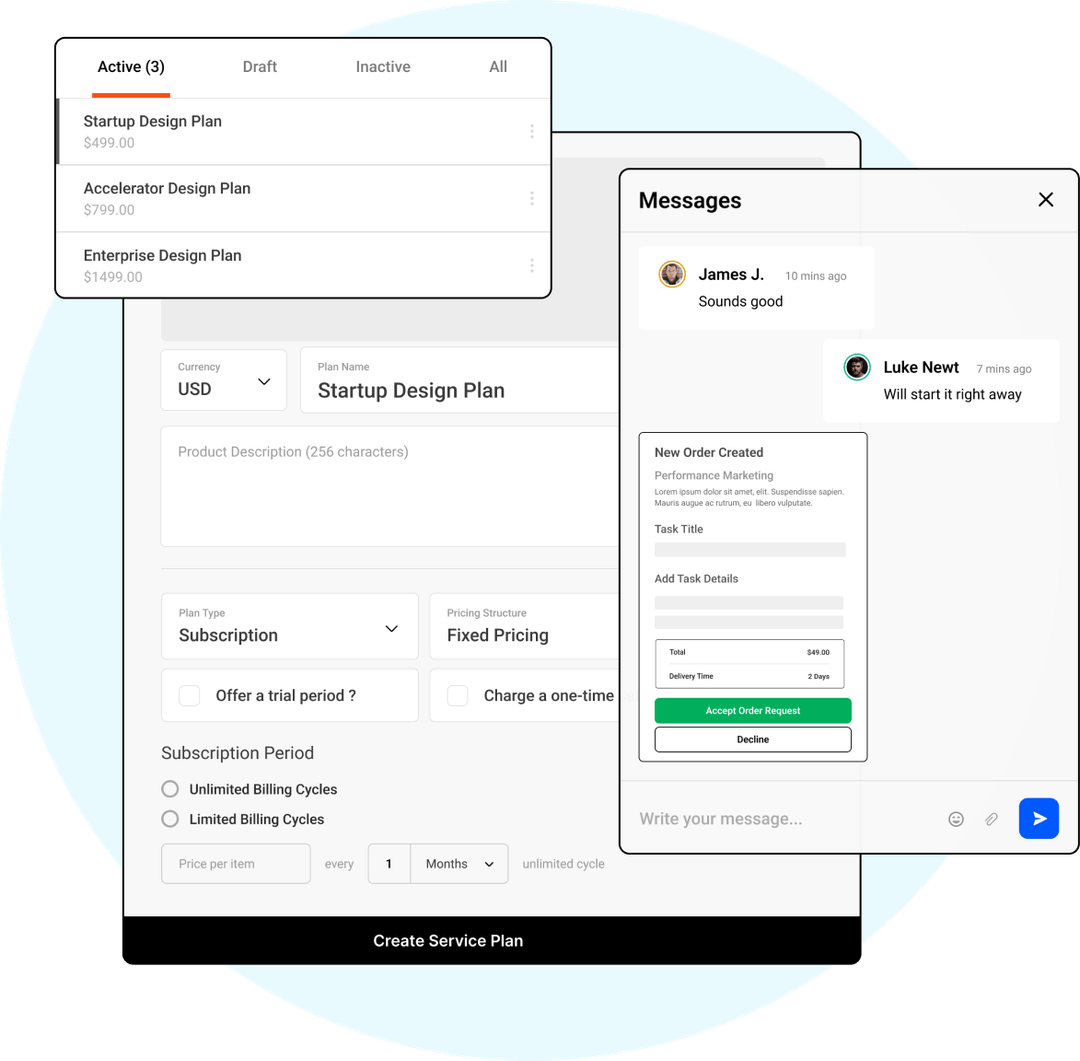
Stop treating every proposal as a blank document
Most proposals share a stable structure: client situation, desired outcome, diagnosis, recommended scope, timeline, responsibilities, price, proof, assumptions, and next step. Create reusable blocks for those sections. Personalize the diagnosis, priorities, risks, and outcome. Standardize the clauses that should remain consistent. This protects your time without sending a generic document.
- Create a reusable proposal outline
- Keep legal and operating terms consistent
- Personalize the problem, recommendation, and evidence
- Delete irrelevant blocks instead of filling space
Qualify before writing
Do not write a proposal until you know the buyer, problem, urgency, decision process, constraints, and realistic budget range. If the work cannot be scoped responsibly, sell a paid diagnostic. A proposal should confirm an understood decision, not perform unpaid discovery in document form.
- Confirm who decides and what success means
- Identify constraints and required access
- Check budget and timing before detailed scoping
- Use a paid audit when uncertainty remains high
Recommend one path and explain the tradeoff
Clients hire specialists to reduce decision load. Lead with the option you recommend and explain why it fits. Add a smaller or larger alternative only when the tradeoff is meaningful. Avoid three artificially balanced packages where the middle is designed merely to manipulate selection.
- Lead with the recommended scope
- Explain what the client gains and gives up
- Use alternatives for real differences in pace or coverage
- Keep optional additions separate from the core result
Turn common work into published packages
When the same proposal appears repeatedly, publish it as a productized package. Define the starting conditions, scope, timeline, and price, then route qualified buyers directly to payment and onboarding. Reserve custom proposals for work that genuinely changes the operating model or risk.
- Review the last ten proposals for repeated scope
- Publish the most common valuable outcome
- Use a direct signup link for qualified buyers
- Keep custom scoping for exceptional complexity
Use AI for assembly, not invented understanding
AI can help select approved blocks, summarize your own discovery notes, check consistency, and identify missing fields. It should not fabricate client priorities, proof, or commitments. Feed it structured notes and an approved template, then review every client-specific statement. Keep confidential information within the data handling agreed with the client.
- Use structured discovery notes as input
- Restrict output to approved proposal blocks
- Verify all client-specific claims
- Review scope, numbers, and obligations manually
End with a frictionless decision
State the exact next step, expiry or scheduling constraint, payment requirement, and what happens immediately after acceptance. A proposal should not end with ‘let me know your thoughts.’ Connect acceptance to the right package and onboarding path so the client does not enter another chain of administrative messages.
- Use one clear acceptance action
- State payment and scheduling conditions
- Trigger the correct onboarding flow
- Archive the accepted scope with the client record
Choose one operational definition of success
Before changing the workflow described in this guide, write down the decision or behaviour that should improve and the evidence that would justify that conclusion. The primary measure is time from qualified enquiry to decision, supported by revision count and close quality. Record the definition, baseline, measurement window, and owner before changing the process. Add a small number of diagnostic signals only when they explain the commercial result. This prevents specialist freelancers and consultants from replacing vague activity with a more elaborate dashboard that still cannot guide the next decision.
- Primary measure: time from qualified enquiry to decision, supported by revision count and close quality
- Record the baseline before changing the process
- Use the same definition before and after
- Name who reviews the evidence and decides what happens next
Turn the advice into a fixed starting engagement
A reader should be able to use this guide independently, but some buyers will need expert diagnosis and implementation. A credible first paid step is a proposal system and qualification sprint. Publish who it is for, the question it resolves, the evidence reviewed, the deliverable, timeline, price, and exclusions. Keep it small enough to create a real decision before a larger commitment. This gives the client a useful result and lets the specialist qualify fit without writing unpaid custom strategy for every enquiry.
- Starter offer: proposal system and qualification sprint
- Promise one decision, plan, or visible result
- State price, timeline, dependencies, and exclusions
- Connect the package directly to its own onboarding path
Collect the minimum evidence required to begin
Work backward from the first useful decision and request only information that changes how work starts. Explain why each sensitive input is required, who can access it, and how missing context affects the timeline. Review the intake within one business day and ask focused follow-up questions inside the client record. Long generic questionnaires create abandonment while still missing the evidence the expert needs. For this workflow, the starting brief should cover the following inputs.
- buyer problem and desired outcome
- decision process
- scope and dependencies
- relevant case evidence
- price and payment terms
- change and approval rules
Run a pre-mortem before automating or scaling
Imagine the work has produced a poor client outcome despite being delivered on time. Identify the assumptions, access gaps, approval failures, and misleading measures most likely to cause it. Turn each risk into a scope boundary, checklist item, review gate, permission rule, or visible exception path. The goal is not bureaucracy. It is to preserve the judgment the client is paying for while making repeated delivery safer and easier to improve.
- Prevent templating before qualification
- Prevent hiding assumptions in polished language
- Prevent sending irrelevant case studies
- Prevent treating every revision as free discovery
Use AI as an assistant with a named human owner
AI can accelerate research, classification, transformation, drafting, and repetitive analysis, but it should not obscure responsibility. Decide which inputs are permitted, what claims require verification, where first-hand expertise must replace generated language, and who approves the final output. Keep confidential client material out of unapproved systems. Save the source, prompt context, material edits, and final decision when the work affects a client recommendation. The efficiency is only real after review and correction time are included.
- Classify client data before using an AI tool
- Verify changing facts against primary sources
- Keep diagnosis, exceptions, and sensitive communication human
- Measure time saved after review, correction, and failure handling
Create proof a future buyer can inspect
A polished final screenshot is not enough. Build a modular proposal assembled from a qualified brief, named assumptions, relevant proof, scope boundaries, and an explicit decision path. Explain the starting condition, relevant constraint, expert decision, implementation, measurement window, result, and what remains uncertain. Remove confidential details and do not imply causation the evidence cannot support. Strong proof helps a future buyer understand how you think, while a current client can see what changed and why the next recommendation is relevant.
- Show the starting condition and commercial context
- Name the expert decision and the rejected alternative
- Use the agreed success definition
- End with who should use the approach and who should not
Design the continuation before the first engagement ends
The natural next service is monthly sales-material and qualification review based on real objections. Introduce it when the first result reveals an ongoing need, not as a surprise after the project closes. Define what is reviewed or delivered each cycle, how priorities are chosen, what capacity and response boundaries apply, and how the client can pause or change scope. A useful recurring offer protects, extends, or repeatedly produces an outcome. Undefined access to the freelancer is not a durable retainer.
- Continuation: monthly sales-material and qualification review based on real objections
- Ongoing measure: time from qualified enquiry to decision, supported by revision count and close quality
- Set a clear cadence, capacity, and response boundary
- Review relevance before renewal or material scope change
Use this two-week field plan
Days one and two: document the current workflow and baseline. Days three and four: package the proposal system and qualification sprint, including scope, price, exclusions, and evidence required. Day five: build the offer-specific intake and first milestone. During week two, invite a small number of relevant clients, past clients, or warm prospects to review or buy the package. Deliver the first useful decision, record every hesitation, and improve the offer before increasing promotion. This creates a live learning loop instead of another planning document.
- Publish one small paid starting offer
- Prepare the first milestone before promoting it
- Invite only buyers for whom the problem is relevant
- Revise the package from real questions and delivery evidence
References used in this guide
These sources support claims that may change over time. The practical recommendations and operating framework are Retainr's editorial synthesis.